
Canberra | November 8, 2025
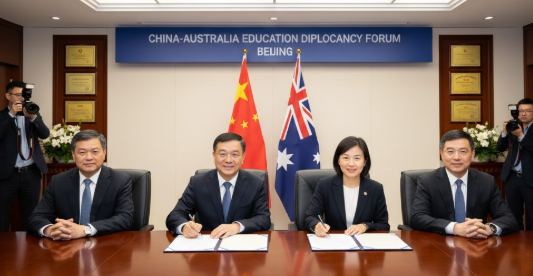
In a move aimed at stabilising international education ties, Universities Australia (UA) has renewed its memorandum of understanding (MoU) with the China Education Association for International Exchange (CEAIE), reaffirming a joint commitment to academic collaboration and student mobility between the two nations. The agreement comes at a time of mounting visa delays, immigration policy uncertainty, and geopolitical friction that have begun to weigh on Chinese student enrolments in Australian universities.
The renewed pact—first signed in 2004—underscores the enduring role of education as a bridge in Australia–China relations, even as the two governments navigate trade tensions and diplomatic caution. It was signed in Beijing during a high-level education mission led by Universities Australia Chair Professor Mark Scott and attended by vice-chancellors from major Australian institutions.
Focus of the New Agreement
Under the updated MoU, Universities Australia and CEAIE will:
- Facilitate academic exchange and research partnerships, particularly in areas of mutual strategic interest such as climate science, clean energy, public health, and artificial intelligence.
- Strengthen student pathways and support programs for Chinese students studying in Australia and Australian students in China.
- Develop joint training, digital learning, and internship opportunities, aligning with both nations’ post-pandemic education recovery strategies.
- Enhance cooperation between vocational education and higher education sectors, promoting skills-based exchanges and joint qualifications.
“This renewal is about keeping academic doors open even when political ones narrow,” said Professor Mark Scott. “Our education partnership with China has withstood global shocks because it rests on people-to-people ties and shared academic purpose.”
Background: A Shifting International Landscape
China remains Australia’s largest source of international students, accounting for roughly one-third of total enrolments. However, the sector has been facing significant headwinds. Recent visa processing slowdowns, changing migration caps, and heightened geopolitical caution have raised concerns among Australian universities about the sustainability of international education revenues.
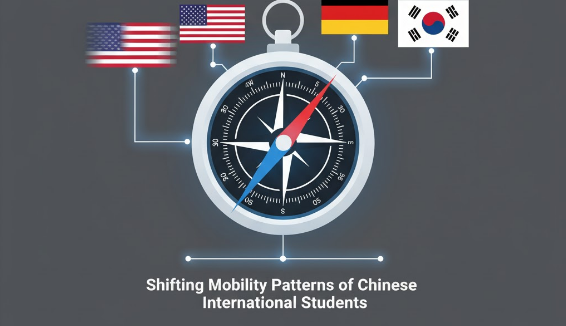
Following the pandemic, Chinese students have also begun diversifying destinations, exploring universities in the U.K., Canada, and Singapore. Meanwhile, Australia’s federal government has introduced stricter migration settings in response to domestic housing and employment pressures, creating additional uncertainty for incoming students.
Analysts note that the renewed MoU is both symbolic and strategic—a reassurance to Chinese partners that Australia continues to welcome international students, even amid a tightening global environment.
“Education diplomacy remains one of Australia’s most effective soft-power tools,” said Dr. Jane Orton, a higher-education policy expert. “Maintaining these ties helps safeguard research cooperation and economic stability in the sector.”
The Economic and Policy Context
International education contributes more than A$36 billion annually to Australia’s economy, supporting over 200,000 jobs. The sector is currently under pressure as student inflows plateau and the government prepares a new International Education Strategy that emphasises sustainability, quality, and regional diversity.
The renewed Australia–China pact also follows a series of policy recalibrations: universities have been encouraged to diversify enrolments beyond China and India, while still nurturing high-value partnerships that drive research and innovation.
At the same time, the MoU includes language reaffirming both countries’ adherence to academic integrity, cybersecurity safeguards, and research transparency—a nod to concerns raised in recent years over data-sharing and intellectual property security in joint projects.
Balancing Collaboration and Caution
While education leaders have welcomed the renewal, the move has drawn scrutiny from some policymakers who urge vigilance in research collaborations involving sensitive technologies. University administrators, however, maintain that such partnerships can thrive under robust ethical and regulatory frameworks.
“We can protect national interests while advancing shared scientific progress,” said a vice-chancellor who attended the Beijing meeting. “Isolation helps no one—especially not our students or researchers.”
The new phase of the Australia–China education partnership is expected to focus less on sheer student numbers and more on mutual innovation, graduate employability, and co-developed research solutions for global challenges.
Outlook
As Australian universities confront slowing enrolment growth and increased competition from other destinations, the renewal of this MoU represents a strategic reaffirmation of global engagement. It signals to students, parents, and research partners that Australia remains committed to openness and academic collaboration—despite the prevailing headwinds.
The success of this partnership, analysts say, will depend on whether both countries can balance politics with pedagogy, ensuring that international education continues to act as a bridge rather than a battleground.