
New Delhi | November 8, 2025
Indian universities are undergoing a profound transformation as they integrate advanced technologies such as artificial intelligence (AI), big data analytics, blockchain, and extended reality (XR) into teaching, administration, and credentialing. The shift reflects a broader national move toward technology-driven education ecosystems, aligning with the goals of the National Education Policy (NEP) 2020 and India’s Digital University initiatives.
Across public and private institutions, technology adoption is reshaping how learning is delivered, tracked, and certified. AI-based tools are being used to personalize learning paths, evaluate student performance in real time, and assist faculty with adaptive content delivery. Big data systems help universities analyze student trends, optimize resource use, and improve academic planning.
In governance, blockchain technologies are being deployed to secure student records and degree verification, addressing long-standing issues of credential fraud and administrative delays. Several universities, including central and state-run institutions, have launched pilot projects for digital diplomas and tamper-proof transcripts, accessible via decentralized platforms.
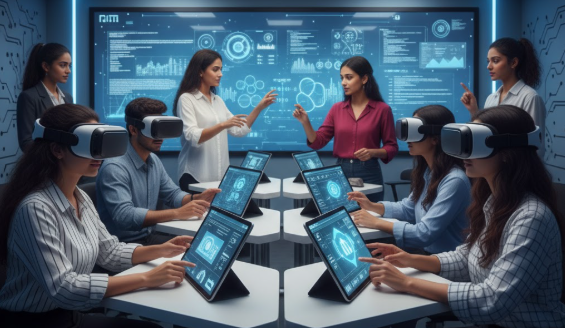
Meanwhile, extended reality (XR) — including augmented and virtual reality — is finding growing use in STEM education, design courses, and medical training, offering immersive learning experiences that were once confined to physical labs.
Education analysts say the integration of these technologies marks a structural shift in India’s higher education model, moving from content-based teaching to data-driven, experiential, and competency-oriented learning. The approach also supports the government’s vision for internationalization and employability, particularly as global industries demand graduates with digital fluency and technological literacy.
The University Grants Commission (UGC) and All India Council for Technical Education (AICTE) have issued multiple advisories encouraging institutions to explore AI-based governance systems, digital credentialing, and hybrid learning frameworks.
Challenges remain, however, including faculty readiness, data privacy concerns, and uneven access to digital infrastructure across states. Yet universities are increasingly viewing these tools not as optional add-ons, but as integral to institutional modernization.
India’s push toward AI and data-driven education is expected to accelerate over the next decade, potentially positioning the country as a global hub for tech-integrated higher learning.