
The Case for Re-Prioritizing Geography in Modern Education
NATIONAL – Amidst the persistent debates over STEM specialization and literacy rates, a compelling argument is emerging for the re-prioritization of Geography as a core, interdisciplinary subject essential for preparing students for a complex global future. Educational commentators and analysts are advocating that the traditional view of Geography as mere memorization of capitals and rivers must be replaced with a recognition of its role as a vital integrator of crucial contemporary concepts.
Geography as the Nexus of Modern Crises
Proponents argue that modern Geography serves as a unique nexus for understanding the most pressing challenges of the 21st century. Its scope extends far beyond physical maps to encompass human systems and their interaction with the environment:
- Climate Literacy and Sustainability: Geography provides the spatial understanding required to analyze climate change impacts, resource distribution, and sustainable development. As discussed amidst the COP30 summit, it is the natural framework for embedding environmental and climate literacy.
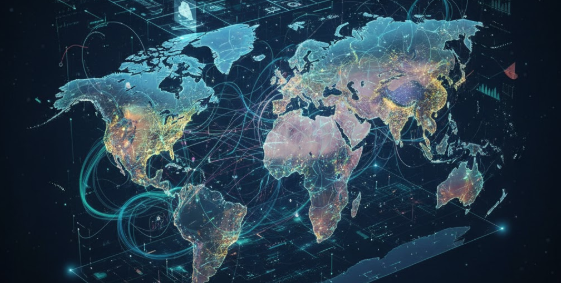
- Geopolitics and Global Systems: The discipline teaches students how political boundaries, trade routes, migration patterns, and urbanization—complex issues often covered in current events—are interconnected and influence global stability.
- Data Analysis and Spatial Thinking: Modern geographical information systems (GIS) are technology-heavy, requiring students to develop advanced skills in spatial data analysis, mapping, and computational thinking, making the subject highly relevant for careers in data science and urban planning.
Fostering a ‘Geographical Imagination’
The true value of Geography lies in fostering a ‘geographical imagination’—the ability to think spatially and see connections between local actions and global consequences. This skill is critical in an era defined by globalization and interdependence.
By re-prioritizing Geography, education systems can move towards a more holistic model that integrates scientific knowledge with human impact, ensuring that students are not only technically proficient but also possess the contextual awareness necessary to be informed, responsible global citizens.