
Uvais Ali Khan’s Transition from CA to Community Educator
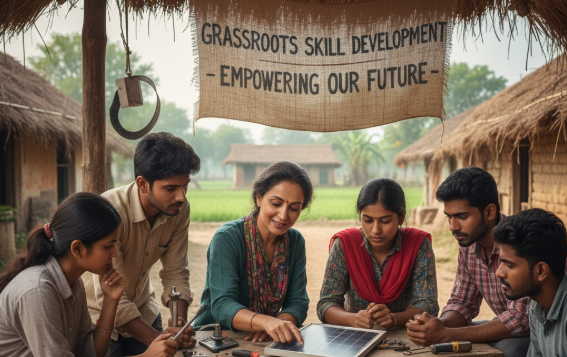
NEW DELHI – The story of Uvais Ali Khan, a Chartered Accountant (CA) who chose to leave a stable professional career to dedicate himself to grassroots skill development, serves as a powerful testament to the impact of social educational leadership. His work focuses on transforming the lives of “directionless” young men and women in Delhi by equipping them with basic, marketable skills necessary for employment.
Bridging the Employability Gap
Khan’s initiative targets a critical issue in urban India: the gap between academic education and practical workplace skills. Many young individuals, particularly those from socio-economically disadvantaged backgrounds, lack the fundamental competencies required to secure and sustain white-collar or service-sector jobs.
Khan’s model concentrates on practical, high-demand skills:
- Financial Literacy and Basic Accountancy: Providing foundational knowledge in accounts and finance, often using simplified modules of software like Tally.
- Essential Digital Skills: Training in software applications like Microsoft Excel and Word, which are indispensable for almost any administrative or service role.
- Mentorship and Confidence Building: Crucially, the program includes mentorship to enhance communication skills, interview readiness, and overall professional conduct, which helps participants overcome social barriers.
Redefining Educational Leadership
Khan’s work embodies a form of social educational leadership that operates outside the formal university structure. He recognized a systemic failure—the inability of the formal education system to translate diplomas into practical skills—and created a direct, high-impact solution.
His transition from a high-paying professional career to community educator underscores a growing trend where talented individuals are leveraging their professional expertise to drive social change. His success stories, which involve placing trained youth in various entry-level positions, highlight the transformative power of focused, vocational-style mentoring in achieving tangible economic mobility.
The focus on grassroots skill development is often recognized and supported by broader scholarship programs, emphasizing that educational funding must support not just high-academic achievement but also the practical, community-level initiatives that build the foundation for a skilled workforce.