
Location: United Kingdom ; Date: November 20, 2025
The United Kingdom Home Office has implemented a significant tightening of compliance criteria for universities holding Sponsor Licenses for international students. The new regulatory standards place unprecedented pressure on UK Universities, introducing strict performance thresholds that directly link a university’s ability to enroll international students to its demonstrable success in retaining and graduating them.
New Accountability Thresholds
The core of the new compliance package is the introduction of two mandatory thresholds:
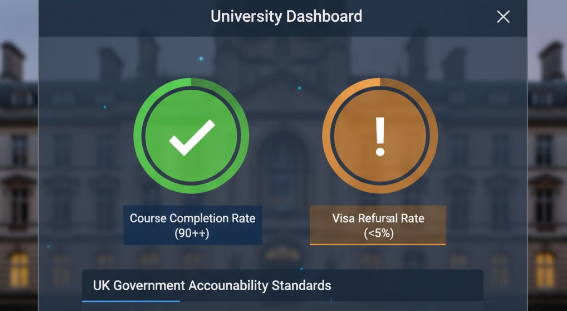
- 90% Course Completion Rate: Universities must now ensure that at least 90% of the international students they sponsor complete their intended courses of study. This metric dramatically increases Accountability for student well-being and academic support, requiring institutions to actively prevent students from dropping out or transferring to non-sponsored courses.
- Sub-5% Visa Refusal Rate: Institutions must maintain a student visa application refusal rate of less than 5%. This threshold holds universities responsible for the quality of their admissions screening and administrative processes, penalizing institutions whose recruitment leads to high rates of unsuccessful visa applications due to insufficient documentation or unsuitable candidate profiles.
Impact on Institutional Strategy and Scrutiny
These standards represent a significant escalation of institutional scrutiny and will fundamentally reshape recruitment and retention strategies:
- Retention Focus: The 90% completion rate mandates increased investment in Student Well-Being, academic tutoring, and integration programs. Universities must now view international student support not just as a service, but as a compliance requirement. Institutions known for admitting students at scale, particularly in vocational or foundation programs, will face the stiffest challenge.
- Admissions Quality: The visa refusal threshold forces universities to prioritize Admissions quality over sheer volume. Institutions with poor compliance records face the threat of having their sponsor license suspended or revoked, which would be financially devastating as international tuition is a critical component of Education Funding.
- Equity Concerns: While the standards aim for Accountability, critics warn they could incentivize universities to avoid admitting students who might pose a perceived “risk” of non-completion or visa complexity, potentially disadvantaging students from certain geographical regions or those requiring extensive Inclusive Education support.
This policy shift formalizes the government’s position: the privilege of sponsoring international students now comes with stringent, measurable performance metrics, pushing the Higher Education sector toward higher standards of student retention and administrative integrity.