

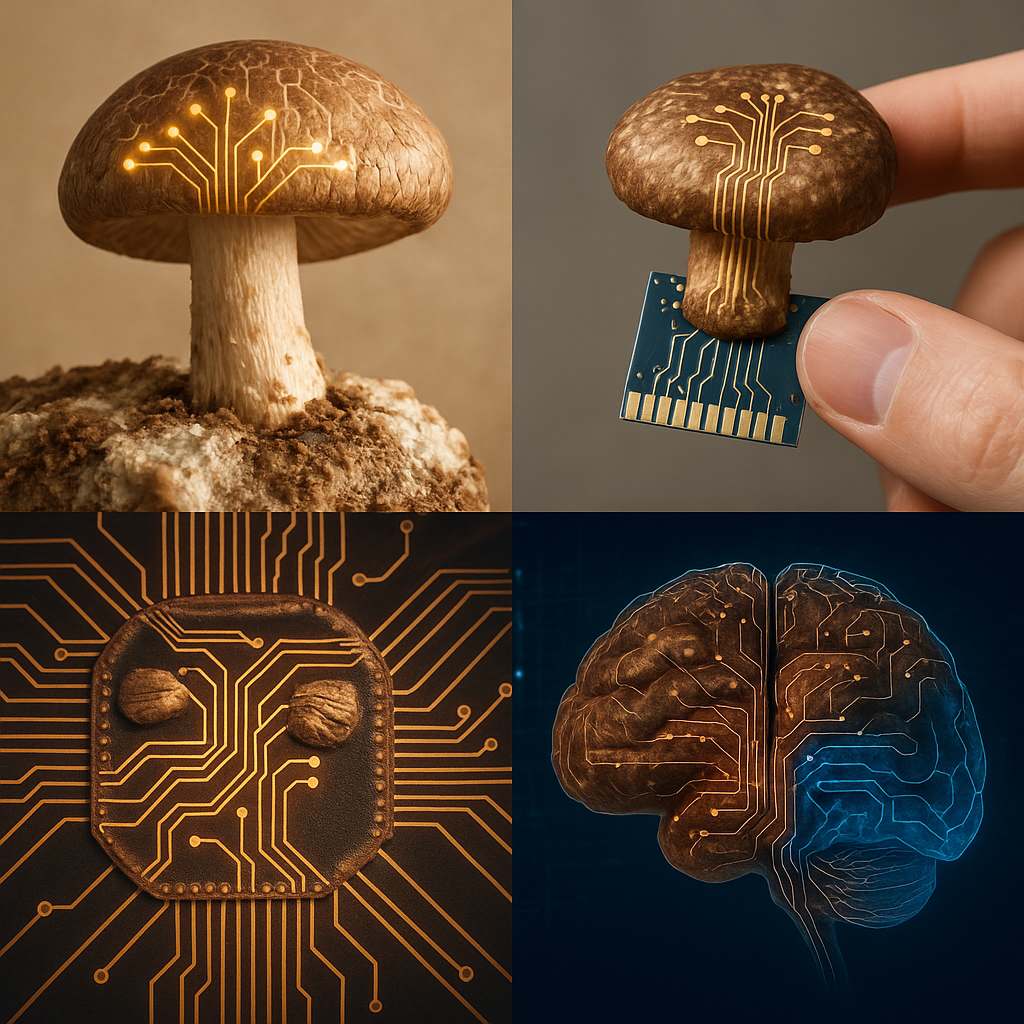
Scientists at Ohio State University have made a remarkable discovery: edible fungi (such as shiitake mushrooms) can be grown and trained to function like memory devices in computing systems. These “fungal memristors” mimic the electrical switching behaviour of conventional semiconductor memory, yet consume significantly less power and are biodegradable.
Why this matters
- The rising demand for computing—and especially AI workloads—is creating huge pressure on conventional semiconductor manufacturing, rare-earth materials, and power consumption. Organic alternatives could help reduce both cost and ecological impact.
- These mushroom-based circuits may one day interface with bioelectronics or neuromorphic systems, blurring the line between living systems and computing devices.
- For education-tech platforms like yours at EduVistaDaily, the story signals a new frontier: bio-hybrid computing, which could reshape how we teach STEM, materials science and sustainable tech to students.
Key details
- The team demonstrated that the fungi can switch between electrical states thousands of times per second — enough to mimic memory cell behaviour.
- The circuits are low-cost, biodegradable and promise standby power savings compared to metal/semiconductor chips.
- The research is still at an early stage: while promising for neuromorphic or niche applications, it’s not yet ready to replace silicon on a mass-scale.
Impact & what to watch
- Over the next few years, we might see prototypes of hybrid “living computer” modules for niche uses: sensors, wearable electronics, devices embedded in bio-environments, or educational kits.
- In the classroom, teachers could use this as a case study: showing how biology meets computing, how materials science is evolving, and how sustainable design is becoming integral to technology.
- It will be interesting to track which companies or research institutes partner with biotech firms or chip-vendors to commercialise this. If large players get involved, the pace could accelerate quickly.