
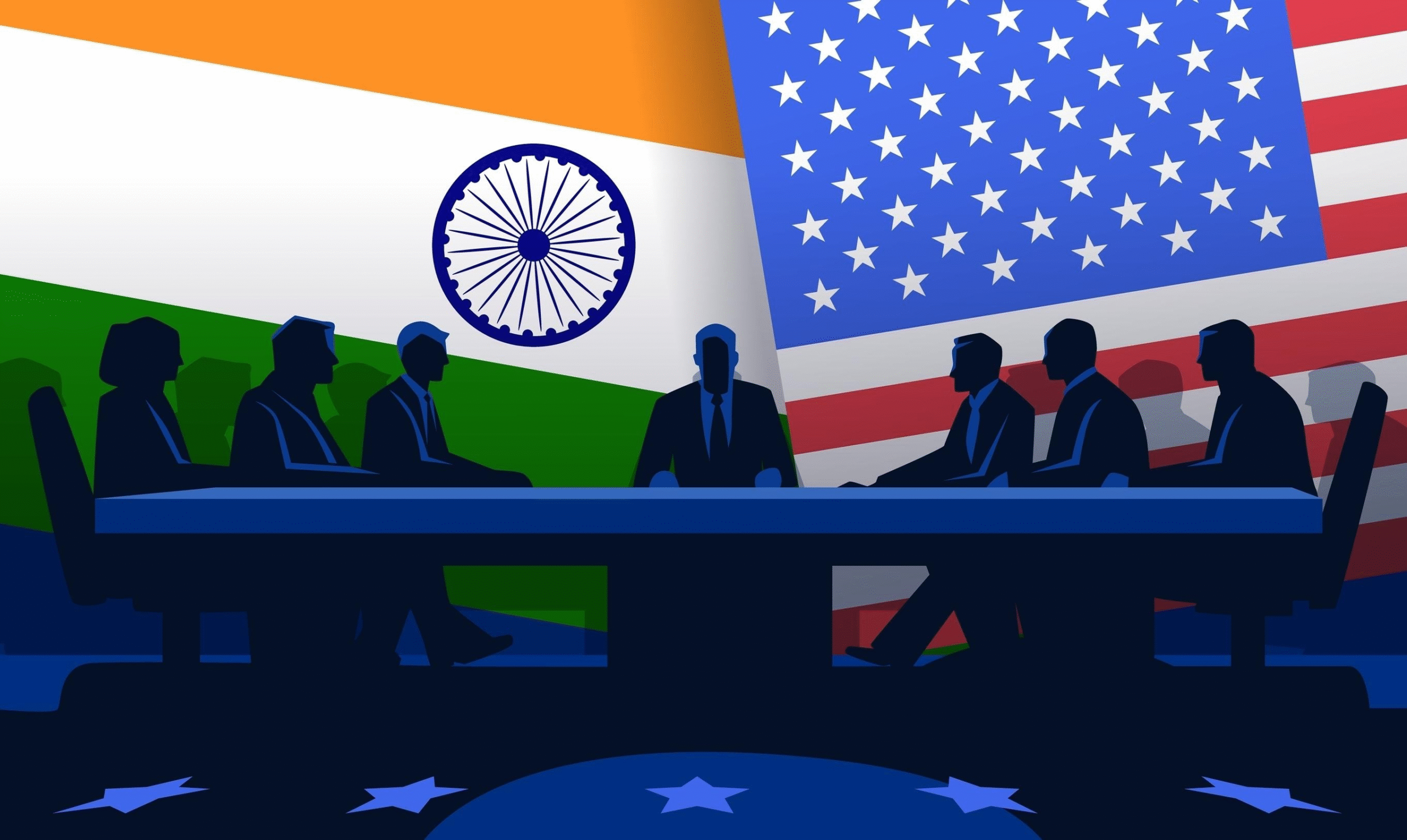
New Delhi/Washington, D.C.—India and the United States are reportedly in the “advanced stages” of finalizing a bilateral trade agreement (BTA) that could resolve the steep tariff dispute that has weighed on economic ties. The negotiations are aimed at providing significant relief to Indian exporters, who have been facing punitive duties totaling 50% on many goods entering the US market.
Commerce and Industry Minister Piyush Goyal has stated that New Delhi is in “advanced stages of discussions” with the US, a sentiment echoed by US President Donald Trump, who recently hinted at an imminent deal. Officials indicate that trade negotiators are now working on the legal text, with both sides “converging on most issues.”
A Path to Tariff Reduction
The resolution centers on significantly reducing the tariffs imposed by the Trump administration. The current 50% duty is a combination of two levies: a 25% reciprocal tariff and an additional 25% punitive penalty for India’s continued crude oil imports from Russia.
According to government sources, the proposed deal is expected to cut the overall US tariff on Indian exports from the current 50% to approximately 15-16%.
In exchange for this relief, the agreement reportedly includes several commitments from India:
- A commitment to decrease procurement of Russian crude oil.
- An agreement to increase energy purchases from the United States.
- Pledges to procure American corn for India’s expanding bio-fuel initiative.
The Ministry of External Affairs confirmed that discussions are ongoing to conclude the deal, but Commerce Minister Goyal has maintained that India will not rush any agreement that does not fully address the interests of its domestic sectors, including farmers, fishermen, and MSMEs.
Expert Criticism Amid Strategic Alignment
The trade progress occurs even as former US officials have criticized the aggressive use of tariffs against a key strategic partner. Former US Commerce Secretary Gina Raimondo recently warned that the Trump administration is “making a big mistake with India,” and that the posture risks eroding crucial strategic partnerships.
Despite the economic friction, the progress in trade negotiations, coupled with the recent signing of a 10-year Major Defence Partnership framework, highlights a complex relationship where strategic security concerns often supersede immediate trade disputes. While sectors like textiles, gems and jewellery, and leather have been hit hard by the 50% tariffs, the deal’s finalization is expected to provide a much-needed boost, making Indian exporters significantly more competitive in their largest export market.