
GST Rate Cuts Make Travel More Affordable
NEW DELHI | November 2, 2025 | Business Desk 📉
The government’s “Next Generation GST Reforms,” dubbed the “GST Bachat Utsav” (Savings Festival), which rolled out on September 22, 2025, has delivered a major boost to India’s tourism and hospitality sectors by significantly reducing tax burdens on key services. The strategic rate rationalization aims to enhance affordability, spur domestic consumption, and position India as a more attractive international travel destination.
Key Rate Changes for Travelers
The most impactful change is the reduction in the tax on accommodation and transport, directly benefiting the middle class and budget travelers:
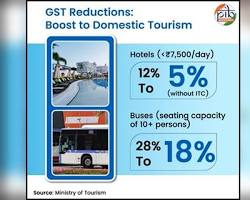
| Service Category | Previous GST Rate | New GST Rate (Effective Sept 22, 2025) | Impact |
| Hotel Rooms (Tariff up to ₹7,500 per night) | 12% (with ITC) | 5% (without ITC) | Significant drop in cost of mid-range hotel stays. |
| Buses (Seating capacity > 10 persons) | 28% | 18% | Lower public transport costs and reduced upfront vehicle cost for fleet operators. |
Industry Experts Foresee Increased Demand and Investment
Industry leaders have widely welcomed the GST revisions, projecting a surge in demand and investment across the value chain.
- Boost for Mid-Segment Hotels: The 7-percentage-point cut on mid-market and budget hotel rooms (up to ₹7,500) makes quality accommodation substantially cheaper. This is expected to drive higher occupancy rates, especially in Tier-2 and Tier-3 cities, and encourage domestic travelers to take more frequent weekend and leisure trips.
- Infrastructure Growth: Reduced tax on buses lowers the capital expenditure for tour operators and state transport undertakings, leading to fleet expansion and modernization. This improves public transport and supports the creation of better travel infrastructure, particularly on pilgrimage and heritage circuits.
- Aligning with Global Standards: By bringing the tax on mid-segment stays down to 5%, India’s hospitality tax structure is now more competitive with major international tourist destinations, which is expected to enhance India’s appeal to foreign visitors.
This strategic tax reduction is a key part of the government’s effort to stimulate the economy, foster job creation in the hospitality and transport sectors, and strengthen India’s cultural and heritage tourism ecosystem.