
Geneva | November 7, 2025
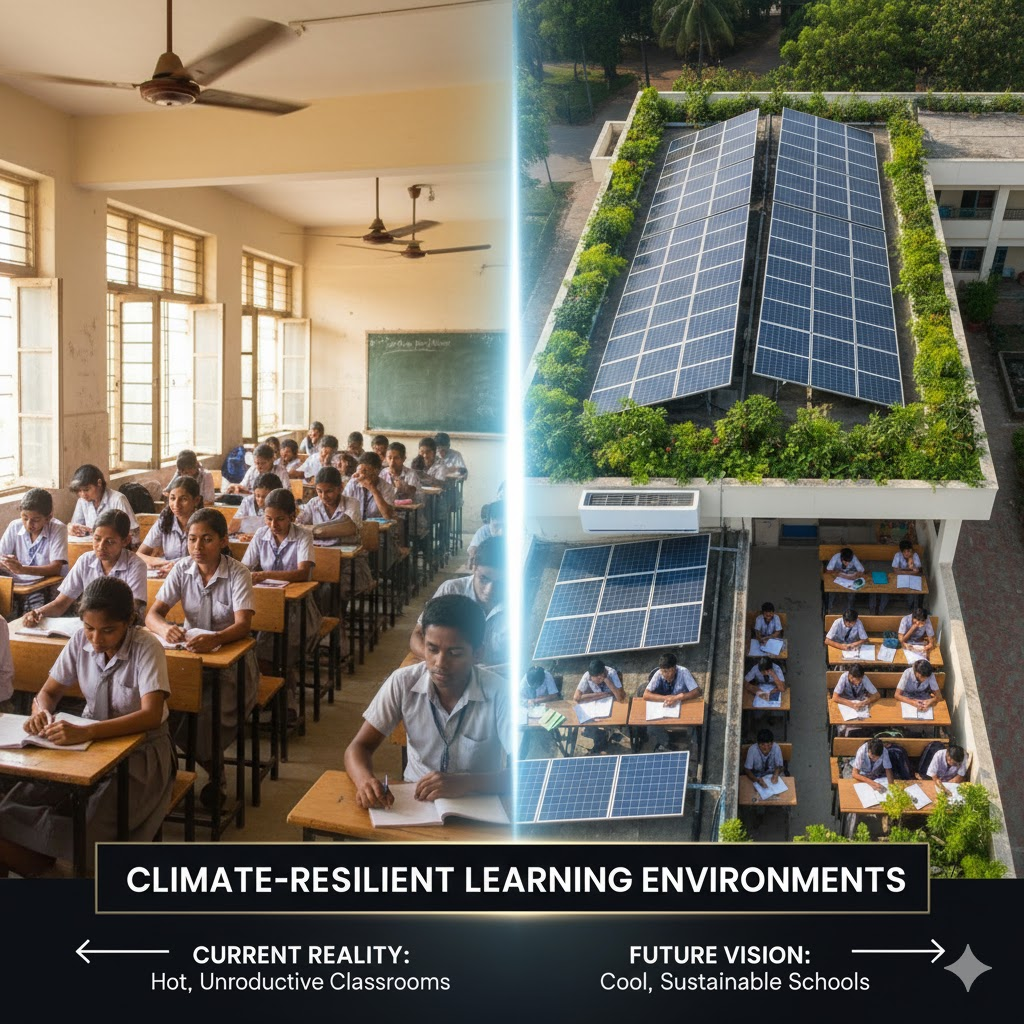
As record-breaking heatwaves sweep across continents, schools worldwide are grappling with a growing crisis — classrooms that are simply too hot for learning. From India and Mexico to southern Europe and the United States, rising temperatures have forced widespread school closures and shortened schedules, prompting an urgent global conversation on climate resilience in education.
According to UNESCO and UNICEF, extreme heat has disrupted schooling for millions of children in over 30 countries since 2023, with classroom temperatures in some regions exceeding 40°C (104°F). Experts warn that without adaptive infrastructure, heat stress and declining attendance could severely impact learning outcomes, especially in low-income and tropical nations.
Governments and education bodies are now launching initiatives to “climate-proof” schools — retrofitting buildings with better ventilation, reflective roofing, and solar-powered cooling systems. The World Bank’s Global Facility for School Resilience, launched earlier this year, is mobilising funds to support heat-adaptation projects in vulnerable regions, particularly in South Asia and sub-Saharan Africa.
In Europe, several countries including France, Spain, and Italy have revised school calendars to mitigate summer heat exposure. Meanwhile, the U.S. Department of Education is investing in “cool schools” under its Climate Adaptation and Infrastructure Modernization program, supporting upgrades in older buildings without air-conditioning.
Education experts caution that cooling measures must be both sustainable and equitable, ensuring access for all communities. “We can’t afford a future where education stops every time temperatures rise,” said a UNESCO spokesperson. “Climate adaptation is no longer optional — it’s essential to keep children learning.”
With climate scientists predicting that 2025 could rank among the hottest years on record, the drive to cool classrooms has become not just a comfort issue, but a matter of educational continuity and child wellbeing.