
November 4, 2025
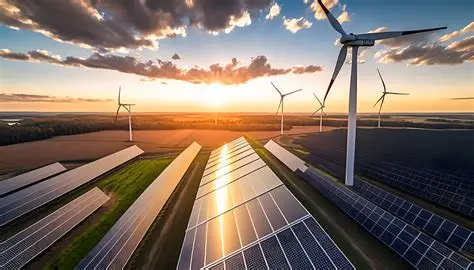
Nairobi, Kenya / Addis Ababa, Ethiopia — Africa is fast becoming the world’s next major destination for renewable-energy investment, as international companies and governments turn their attention to the continent’s vast solar and wind potential. With climate impacts intensifying and global demand for clean energy surging, analysts say Africa’s time in the renewable spotlight has finally arrived.
A Continent Rich in Natural Power
Stretching from the Sahara Desert to the southern coasts, Africa receives some of the world’s highest solar radiation and boasts extensive wind corridors along its coastlines and plateaus. According to recent international energy assessments, Africa could generate over 60% of its total power from renewables by 2040, if investment and infrastructure catch up.
Countries like Morocco, Kenya, South Africa, and Egypt are leading the charge. Morocco’s Noor Solar Complex, Kenya’s Lake Turkana Wind Project, and Egypt’s Benban Solar Park are already global showcases of renewable ambition.
Investors Eye Opportunity — and Urgency
In 2025, several major funding announcements have highlighted Africa’s rising profile:
- The African Development Bank (AfDB) and European Investment Bank launched a $12 billion Green Growth Fund to accelerate grid connectivity.
- China, India, and the EU have each announced bilateral renewable-energy cooperation deals with African partners.
- Private firms from the Gulf, including Masdar and ACWA Power, have committed to large-scale solar farms in West and East Africa.
Experts say these moves mark a strategic shift — from viewing Africa as an aid recipient to seeing it as a key partner in the global energy transition.
Challenges Still Run Deep
Despite the optimism, progress remains uneven. Many regions still lack reliable power infrastructure, and financing costs for clean-energy projects remain higher than in developed economies.
Energy analysts also caution that local ownership and equity must remain central to this transition. Without inclusive planning, Africa risks becoming a supplier of green power to the world while its own citizens continue to face energy poverty.
“Renewable energy can’t just be an export commodity,” said an environmental economist in Nairobi. “It has to power schools, hospitals, and homes right here in Africa.”
The Bigger Picture
As climate change worsens droughts, floods, and food insecurity across the continent, renewable energy is no longer just an economic opportunity — it’s a survival strategy. The combination of global investment, regional cooperation, and political will could make Africa not only the clean-energy powerhouse of tomorrow but also a model for sustainable development in the Global South. Africa’s renewable revolution offers a living lesson in resilience and innovation. For students and citizens worldwide, the continent’s energy transformation underscores how climate solutions can also drive equity, technology, and economic empowerment.