
Global | November 7, 2025
Asia has emerged as the new epicentre of higher education excellence, with universities across China, India, South Korea, Singapore, and Japan showing record improvements in the QS World University Rankings 2026 and other major listings — signalling a significant realignment of global academic influence.
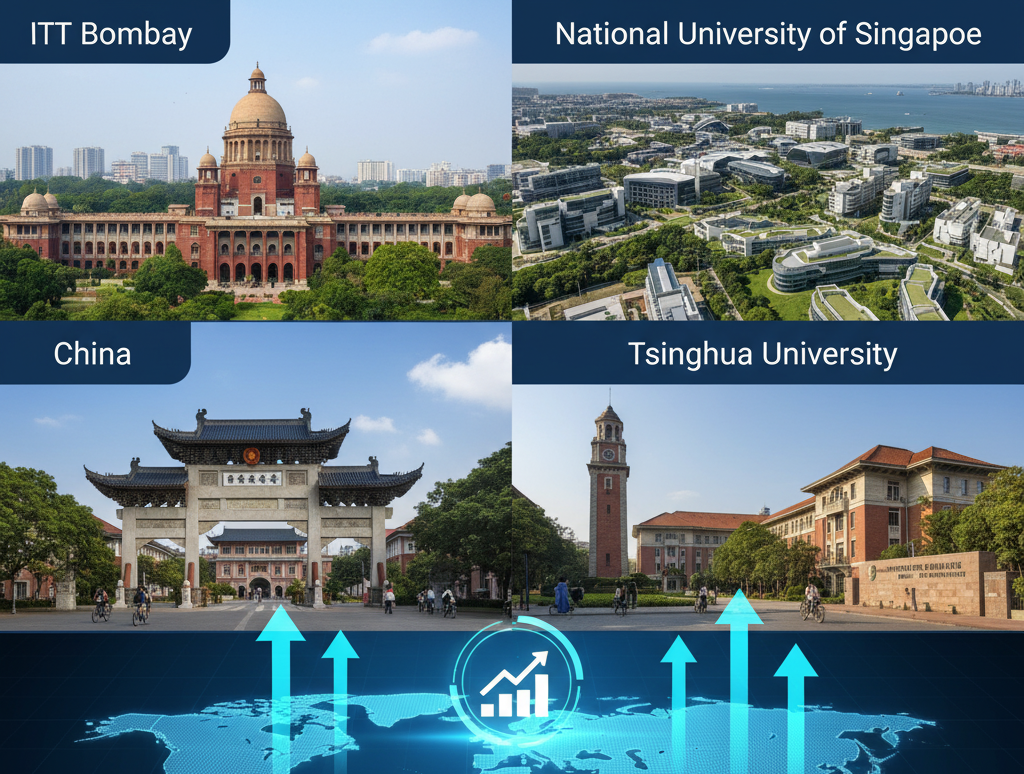
According to the newly released QS World University Rankings: Asia 2026, Asian universities dominate the regional landscape, with China overtaking India as the most-represented nation, while India remains the second-largest contributor of ranked institutions. Leading Indian universities such as IIT Bombay, IIT Delhi, IISc Bengaluru, and Delhi University improved their standings, placing among the top 6 percent in Asia.
Meanwhile, Tsinghua University and Peking University from China have consolidated their positions within the top 10, while National University of Singapore and University of Hong Kong continue to perform strongly in academic reputation, research impact, and internationalisation indicators.
Education analysts note that this shift marks a broader redistribution of academic power — from long-dominant Western institutions toward Asia’s fast-rising research and innovation ecosystems. Universities in the region have made substantial investments in STEM research, international collaborations, and employability-linked learning models, reflecting governments’ long-term education reform strategies.
“Asia’s growing visibility in global rankings reflects not just performance metrics, but a shift in the geography of knowledge production,” said a senior QS spokesperson in the report. “Research output, innovation capacity, and global collaboration are now defining competitiveness.”
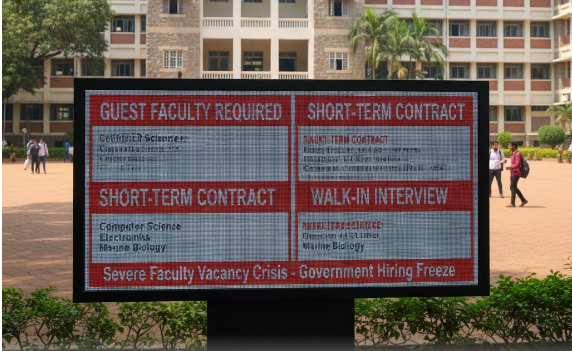
For India, the rankings reaffirm its expanding academic footprint, even as experts stress the need to enhance faculty-student ratios, research funding, and global engagement to sustain progress.