
Global Markets Desk | November 3, 2025
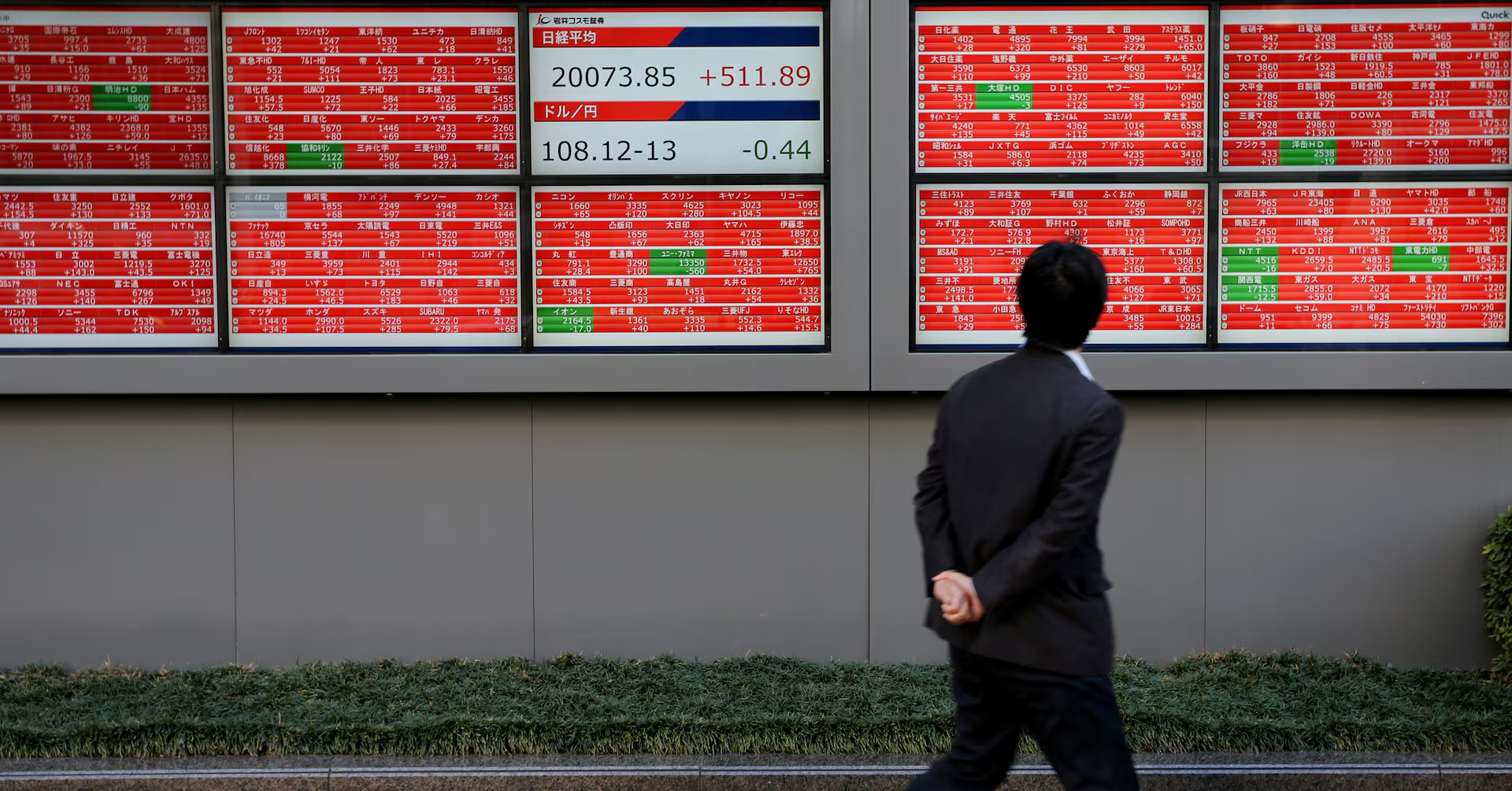
HONG KONG — Asian stock markets rallied on Monday, buoyed by renewed optimism following a trade truce between the United States and China and strong investor sentiment surrounding artificial intelligence (AI) technologies.
Benchmark indexes in Tokyo, Hong Kong, and Seoul posted sharp gains, while the U.S. dollar climbed to a three-month high amid expectations that the Federal Reserve may keep interest rates elevated longer to contain inflation.
The MSCI Asia-Pacific Index rose nearly 1.8%, marking its strongest one-day gain in weeks. Japan’s Nikkei 225 gained 1.5%, led by technology shares such as Sony and SoftBank, while South Korea’s KOSPI added 1.2%. In Hong Kong, the Hang Seng Index jumped 2.3%, driven by Chinese tech giants Alibaba and Baidu.
Trade Truce Boosts Market Confidence
The rally follows reports that Washington and Beijing have agreed to a limited trade understanding aimed at easing tensions and reestablishing communication on key economic issues. Investors viewed the development as a sign of stability after months of uncertainty around tariffs and technology restrictions.
“Markets are breathing a sigh of relief,” said Li Chen, an economist at Nomura. “While the agreement is modest, it signals both sides’ willingness to prevent further escalation, which is positive for regional growth.”
The truce is expected to boost manufacturing sentiment and trade flows across Asia, though analysts caution that deeper geopolitical frictions remain unresolved.
AI Momentum Lifts Tech Sector
Alongside geopolitical optimism, a renewed wave of enthusiasm around artificial intelligence has also fueled investor appetite. Shares in chipmakers and AI-linked firms across Taiwan, South Korea, and Japan climbed sharply after U.S. tech stocks closed higher on Friday.
“AI remains the defining theme of global equity markets,” said Hiroko Tanaka, a strategist at Daiwa Securities. “Asian semiconductor firms are direct beneficiaries, and the trade truce removes one of the biggest supply chain uncertainties.”
Dollar Strength and Rate Caution
The U.S. dollar rose to its highest level in three months, supported by stronger-than-expected economic data and hawkish comments from Federal Reserve officials suggesting that rate cuts may not come until mid-2026.
While a firmer dollar typically pressures Asian currencies and export competitiveness, investors seemed more focused on the near-term optimism from the trade breakthrough. The Japanese yen weakened slightly to ¥153 per dollar, while China’s yuan held steady after central bank intervention.
Outlook: Relief Rally or Turning Point?
Analysts say this week will test whether the rally can sustain momentum. Key indicators, including China’s service PMI and U.S. labor market data, will shape investor confidence.
“It’s too early to call this a structural turnaround,” noted HSBC strategist Samuel Wong. “But the combination of AI-driven growth and reduced trade tension provides short-term fuel for risk assets.”
For now, Asian markets appear to be riding a wave of relief — one powered by technology optimism and a fragile but welcome thaw in the world’s most consequential trade relationship.