
Location: New Delhi, India (National Higher Education Policy) Date: November 20, 2025
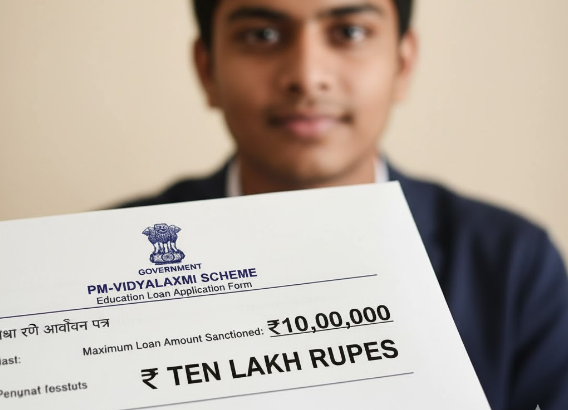
In a significant move to strengthen Equity & Diversity and enhance Access to higher education, the Union Cabinet has granted final approval for a major expansion of financial assistance under the existing Pradhan Mantri Vidyalaxmi (PM-Vidyalaxmi) Scheme. The key policy change focuses on providing financial security for meritorious students by increasing the maximum limit for education loans under the scheme to ₹10 Lakh (approximately $12,000 USD).
This decision is designed to directly address one of the most persistent financial barriers faced by academically strong students from economically disadvantaged backgrounds. By increasing the loan ceiling, the government aims to ensure that high-cost or specialized professional degree programs—such as engineering, medicine, and management—remain accessible, thereby preventing talent drain based on parental income.
The PM-Vidyalaxmi Scheme is a crucial component of the government’s strategy to meet the National Education Policy (NEP) 2020 goal of boosting the Gross Enrollment Ratio (GER) in higher education. The scheme functions as a centralized portal for students to apply for and track their education loan applications, ensuring transparency and reducing bureaucratic hurdles often associated with securing bank financing.
Impact and Policy Implications:
- Reducing Financial Barriers: The increased limit is particularly impactful for students seeking admission to flagship institutions like the IITs, IIMs, and major state medical colleges, where fees and associated living costs often exceed the previous, lower loan cap.
- Focus on Merit and Equity: By specifically targeting “meritorious students,” the scheme reinforces a national commitment to meritocracy, ensuring financial resources follow academic potential regardless of the student’s socio-economic status.
- Budget & Finance: The policy signals continued budgetary commitment to the education sector, treating higher education financing as a critical national investment for Workforce Readiness and economic growth, rather than solely a private expenditure.
The implementation details, including subsidy eligibility criteria and interest rate specifics, are expected to be formalized by the Department of Financial Services in coordination with public sector banks in the coming weeks.