
Location: China Date: November 20, 2025
The decline in Chinese student enrollment in U.S. higher education institutions continues, with the latest data showing a 4% drop in the 2024-25 academic year. Despite targeted and aggressive recruitment campaigns by U.S. universities, this downward trend suggests that geopolitical anxieties and fundamental shifts in mobility preferences are overriding institutional efforts. The once-dominant Chinese student population is now actively seeking and finding viable Career Pathways and quality Higher Education in alternative global destinations.
Geopolitical and Economic Headwinds
The persistent decline is attributed to a confluence of policy and macro-economic factors:
- Geopolitical Anxieties: The primary driver remains the Policy & Politics climate. Chinese students and their families express growing concerns over the safety, visa stability, and political treatment of Chinese nationals in the U.S. Heightened scrutiny of students, particularly those in Science & Tech and Research fields, has created a perception of risk that often outweighs the academic prestige of a U.S. degree.
- Economic Uncertainty: Slowing economic growth in China has led families to become more cost-sensitive. The high, non-subsidized tuition of U.S. universities is increasingly being scrutinized against more affordable alternatives in Europe and Asia.
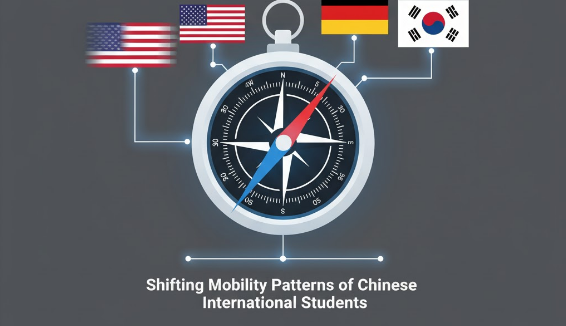
- Shifting Mobility Patterns: Chinese families are diversifying their international education portfolio. There is a marked increase in students choosing:
- Non-English Speaking European Destinations: Countries like Germany and France, which offer high-quality education, lower tuition costs, and improving post-study work options.
- East Asian Hubs: Institutions in South Korea and Japan are becoming preferred alternatives, offering cultural familiarity, geographic proximity, and globally recognized academic excellence.
Impact on U.S. Global Universities
For U.S. institutions, the decline is problematic for both Budget & Finance and Research. The loss of Chinese student tuition revenue, historically the largest single source of international funding, creates significant budget deficits, particularly in graduate STEM & Innovation programs. While U.S. universities have successfully boosted enrollment from India and Vietnam to partially offset the numbers, the revenue loss associated with the lower-volume, but high-cost, Chinese market is harder to replace. This necessitates a long-term strategy of regional diversification and intensified efforts to address the perceived political risks.