
Location: United States ; Date: November 20, 2025
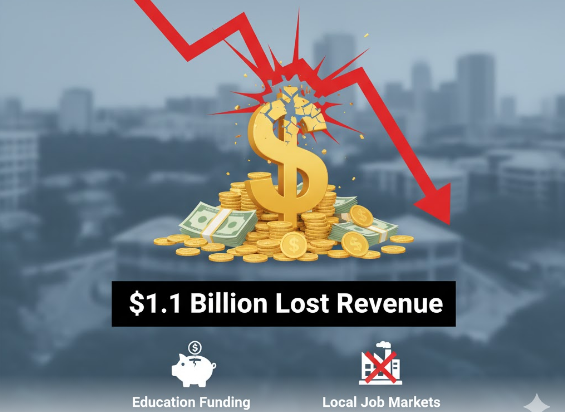
The U.S. higher education sector is facing a deepening financial and economic crisis following the release of new data that quantifies the severe cost of declining international student arrivals. A report by NAFSA: Association of International Educators and JB International estimates that the plummeting enrollment rate translates directly to over $1.1 billion in lost revenue and nearly 23,000 fewer jobs across the U.S. economy for the Fall 2025 semester alone.
The Enrollment Cliff and Its Economic Drivers
The revenue loss is a direct consequence of a massive 17% decline in new international student enrollments for Fall 2025—the sharpest non-pandemic drop recorded in over a decade. While total enrollment (including returning students and those on Optional Practical Training, or OPT) dipped only 1%, the contraction of the “pipeline” is highly alarming, as these new students represent future tuition and local spending.
The core drivers of this precipitous decline are overwhelmingly cited by university administrators as policy and administrative bottlenecks:
- Visa Concerns: An astonishing 96% of U.S. institutions cited visa application delays, stricter screenings, and political rhetoric as major obstacles. The temporary halt of F, J, and M visa appointments during the critical summer application window created a massive backlog, causing thousands of accepted students to miss their start dates or choose other countries.
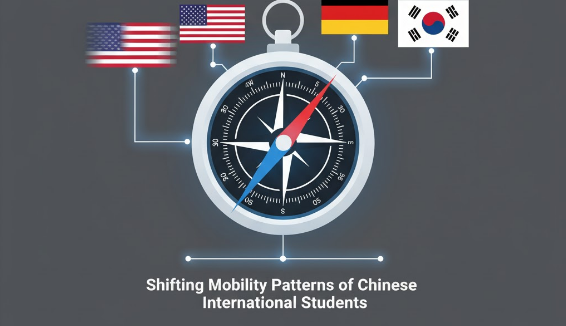
- Political Uncertainty: Policy changes, including threats to revoke visas or eliminate the Duration of Status (D/S) rule, have created significant uncertainty for prospective students, driving them toward competitors like Canada, the UK, and Australia, which offer clearer Career Pathways and post-study work opportunities.
Impact on Education Funding and Job Markets
The $1.1 billion loss is critical because international students are an indispensable source of Education Funding. They often pay the highest non-subsidized tuition rates, effectively subsidizing domestic students and supporting high-cost academic programs and Research infrastructure.
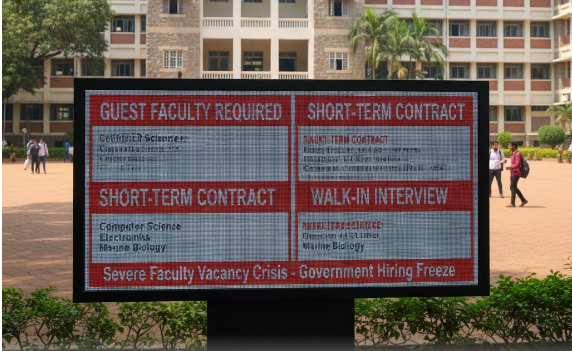
- Institutional Cuts: The absence of this revenue is immediately impacting institutional Budget & Finance. Universities, especially those with large graduate programs dependent on international tuition, are already announcing hiring freezes, program cuts, and faculty layoffs.
- Local Economies: The job loss projection of 23,000 affects not just university staff but numerous local sectors. NAFSA estimates that for every three international students, one U.S. job is supported in sectors including housing, dining, retail, and healthcare. States with large international student populations, such as Texas, are projected to lose tens of millions in economic activity.
This crisis illustrates how federal immigration and visa policies are profoundly and immediately affecting U.S. economic competitiveness and the financial stability of the Higher Education sector.