
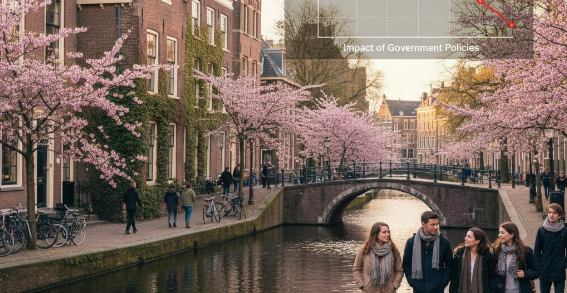
Amsterdam: Universities in the Netherlands have recorded a notable 5% decline in new international student enrollment for the current academic cycle, a significant shift attributed to government policy aimed at curbing rapid population growth in certain cities and reducing pressure on public infrastructure, particularly housing. This decrease follows years of sustained high growth that had positioned the Netherlands as one of Europe’s most attractive non-English-speaking study destinations.
The decline is primarily driven by targeted government measures designed to manage the influx. These measures include capping enrollment in certain popular English-taught programs and proposals to limit the number of courses available in English. The policy goal is to ensure that the educational system remains sustainable and that local students are not disadvantaged by overcrowding in popular disciplines.
Furthermore, the implementation of new European Union digital border systems, such as the European Travel Information and Authorisation System (ETIAS) and the Entry/Exit System (EES), is adding new layers of administrative bureaucracy. While intended to enhance security, these systems introduce new friction points and complexity for non-EU students applying for visas and entry, signaling a broader, region-wide trend toward more managed and restrictive international student mobility.
This development is a cautionary signal for the Dutch higher education sector, which benefits significantly from the economic contribution and intellectual diversity provided by international students. Institutions now face the challenge of balancing political mandates to manage growth with the necessity of maintaining revenue streams and global academic competitiveness.