
Global | November 10, 2025
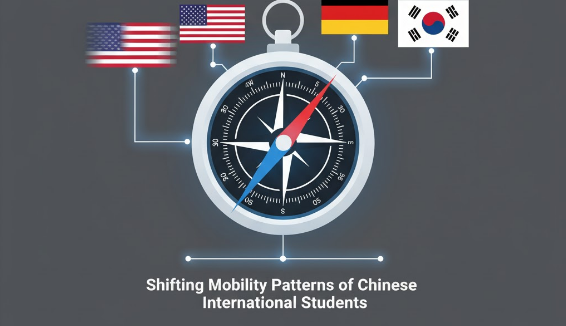
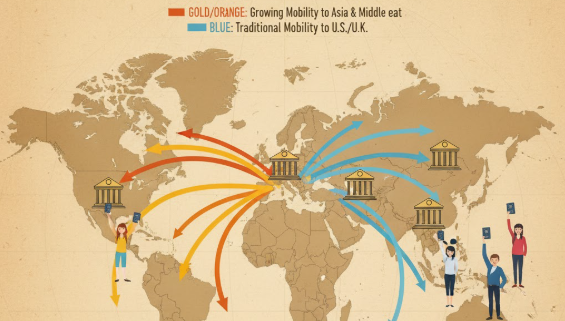
A new international analysis signals a seismic shift in global student mobility, with traditional higher education destinations — the United States, United Kingdom, Australia, and Canada — witnessing stagnation or decline in international enrolments. Meanwhile, emerging hubs across Asia and the Middle East are recording unprecedented growth in cross-border student interest.
According to recent data from UNESCO’s Global Flow of Tertiary-Level Students and the OECD Education at a Glance 2025 report, enrolments in the U.S. and U.K. have plateaued, while countries like Singapore, the United Arab Emirates, Malaysia, South Korea, and China are capturing growing shares of global student mobility. These nations are leveraging affordable tuition, industry-linked programmes, and liberalised visa pathways to attract talent.
Analysts describe the shift as part of a broader “multipolar education era” — where academic influence and innovation are decentralised, with universities worldwide investing in research, sustainability, and employability-driven curricula. Institutions such as NYU Abu Dhabi, KAUST, and the National University of Singapore (NUS) are leading this transformation through strategic partnerships and global-standard infrastructure.
The findings point to a structural rebalancing of global education, suggesting that the next decade may see Asia and the Middle East emerge as key knowledge economies and talent magnets.
(Sources: Al-Fanar Media, The PIE News, OECD, UNESCO)