
Dubai | November 12, 2025
Global Education Power Shift: Why International Students Are Turning Away from the West
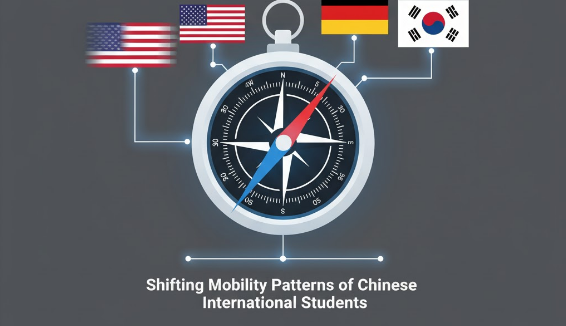
A major transformation is underway in the global education landscape as international students increasingly look beyond traditional Western destinations — such as the United States, United Kingdom, Australia, and Canada — and instead choose to study in Asian and Middle Eastern countries that are rapidly expanding their higher-education capacity and international outreach.
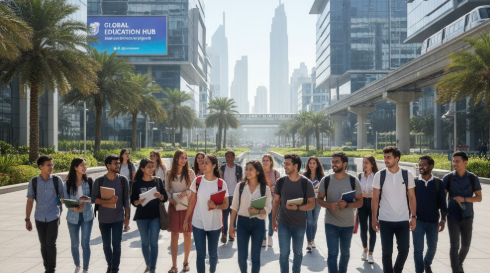
According to global mobility data and education market analyses, destinations such as the United Arab Emirates, Singapore, South Korea, China, and Saudi Arabia have seen a sharp rise in international student enrolments. These nations are positioning themselves as new education hubs, offering English-medium programmes, scholarships, and research collaborations that rival established Western institutions.
Experts point to several drivers of this “education power shift”: stricter visa policies and higher living costs in Western countries, growing geopolitical uncertainty, and a deliberate policy focus in Asia and the Gulf to attract global talent through education-as-diplomacy strategies.
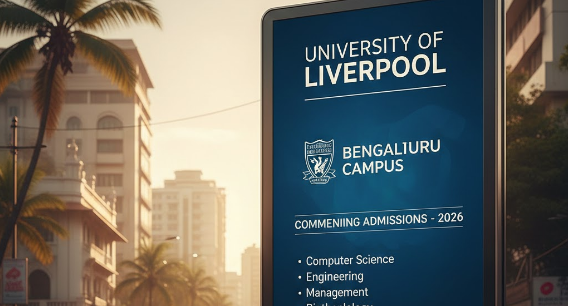
In the UAE, for instance, partnerships with international universities have created transnational campuses and innovation hubs, while China’s “Study in China” initiative and Saudi Arabia’s Vision 2030 reforms are reshaping higher education into globalised, technology-enabled ecosystems.
Education analysts argue that this realignment reflects broader economic and cultural changes, as developing regions seek to retain and attract talent rather than export it. The result is a more multipolar education world, where academic mobility is no longer dominated by a handful of Western nations.
The trend also suggests new opportunities for universities worldwide to rethink global engagement and collaboration models in a post-pandemic, AI-driven education economy.