
VISAKHAPATNAM | November 3, 2025 | Business & Economy Desk 📈
The “Next Generation GST Reforms,” part of the nationwide GST Bachat Utsav, have provided a significant strategic uplift to the economy of Andhra Pradesh, particularly focusing on its extensive coastline and burgeoning manufacturing hubs. By reducing tax rates on key inputs and products, the government aims to boost exports, support local livelihoods, and reduce the cost of business for Micro, Small, and Medium Enterprises (MSMEs).
Boost for the Coastal Economy (Fisheries & Exports)
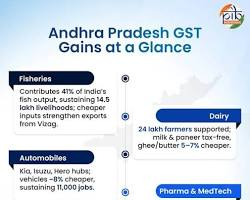
Andhra Pradesh, which contributes over 40% of India’s fish production, is set to see substantial benefits across its nine coastal districts. The tax rationalization directly lowers operating costs for over 14.5 lakh people dependent on the sector.
| Product/Service | Previous GST Rate | New GST Rate | Impact on Coastal Economy |
| Fishing Gear (e.g., nets, parts) | 12% / 18% | 5% | Reduces input costs for traditional fishing communities. |
| Fish Oils, Extracts, Preserved Products | 12% / 18% | 5% | Eases tax burden on small processors and boosts seafood export competitiveness from Visakhapatnam Port. |
| Diesel Engines, Pumps, Aerators | 12% / 18% | 5% | Lowers the cost of essential machinery used for fishing and aquaculture. |
Stimulus for Manufacturing Hubs
The state’s key manufacturing sectors, including automobiles and MedTech, have received a targeted stimulus to increase competitiveness and consumer demand.
- Automobile Sector (Anantapur & Chittoor): The GST on three-wheelers, small cars, and motorcycles (up to 350cc) has been reduced from 28% to 18%. A uniform 18% rate on auto parts further reduces production and maintenance costs. This makes vehicles approximately 8% cheaper for consumers, driving domestic demand and strengthening the competitiveness of the state’s auto exports.
- Pharmaceuticals & MedTech (Visakhapatnam AMTZ): Tax cuts have made healthcare manufacturing more affordable. GST on various medical devices, including thermometers, surgical instruments, and diagnostic kits, has been lowered from 12% and 18% to a uniform 5%. This is expected to lower healthcare costs for domestic patients and strengthen the state’s position as a global exporter of medical technology.
The reforms also benefit key GI-tagged handicrafts and agricultural products native to the state, such as Araku Coffee and Leather Puppetry, which have seen their GST reduced from 12% to 5%, promoting local livelihoods and exports.