
Global Events Drive Calls for Curricular Reform
GLOBAL/NATIONAL – Amidst widespread protests and intense negotiations at the recent COP30 Climate Summit, educational experts and columnists have amplified calls for a fundamental overhaul of school curricula to fully embed climate literacy from an early age. The increasing visibility of climate-related emergencies and the urgency of international policy debates are underscoring the necessity of equipping the next generation with the knowledge and tools to address the global crisis.
The Imperative for Early Climate Education
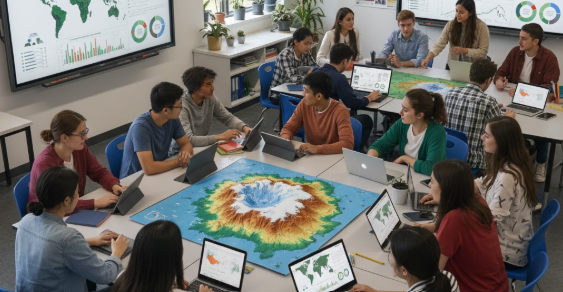
The sentiment emerging from both the scientific community and the educational sector is that climate change can no longer be treated as an optional or supplementary topic within environmental science. Instead, it must be integrated across disciplines to foster a deep, actionable understanding:
- Interdisciplinary Integration: Climate literacy should be woven into subjects beyond science, including geography (analyzing environmental impact and human settlement), social studies (understanding policy and justice), and economics (evaluating sustainable development).
- Civic Responsibility: By learning about the complexities of global summits like COP30 and the mechanisms of international agreements, students gain an appreciation for civic responsibility and the role of diplomacy in solving planetary challenges.
- Skill Development: Comprehensive climate education fosters critical thinking, problem-solving, and data analysis—skills essential for developing innovative solutions for mitigation and adaptation.
This renewed focus aligns with the earlier directive for schools to incorporate current events into daily assemblies, ensuring that major global developments, particularly those concerning the environment and climate policy, become part of the regular educational dialogue.
Connecting Policy and Pedagogy
The demonstrations and debates at the COP30 summit serve as a powerful real-world case study for students. Educators argue that utilizing these events to analyze the gap between climate commitments and real-world actions can inspire greater engagement and a sense of agency among young people.
Ultimately, the drive to embed climate literacy is viewed as an essential investment in the future, preparing students to be informed consumers, responsible policymakers, and active contributors to a sustainable global economy.