
Banaskantha (Gujarat) | November 8, 2025
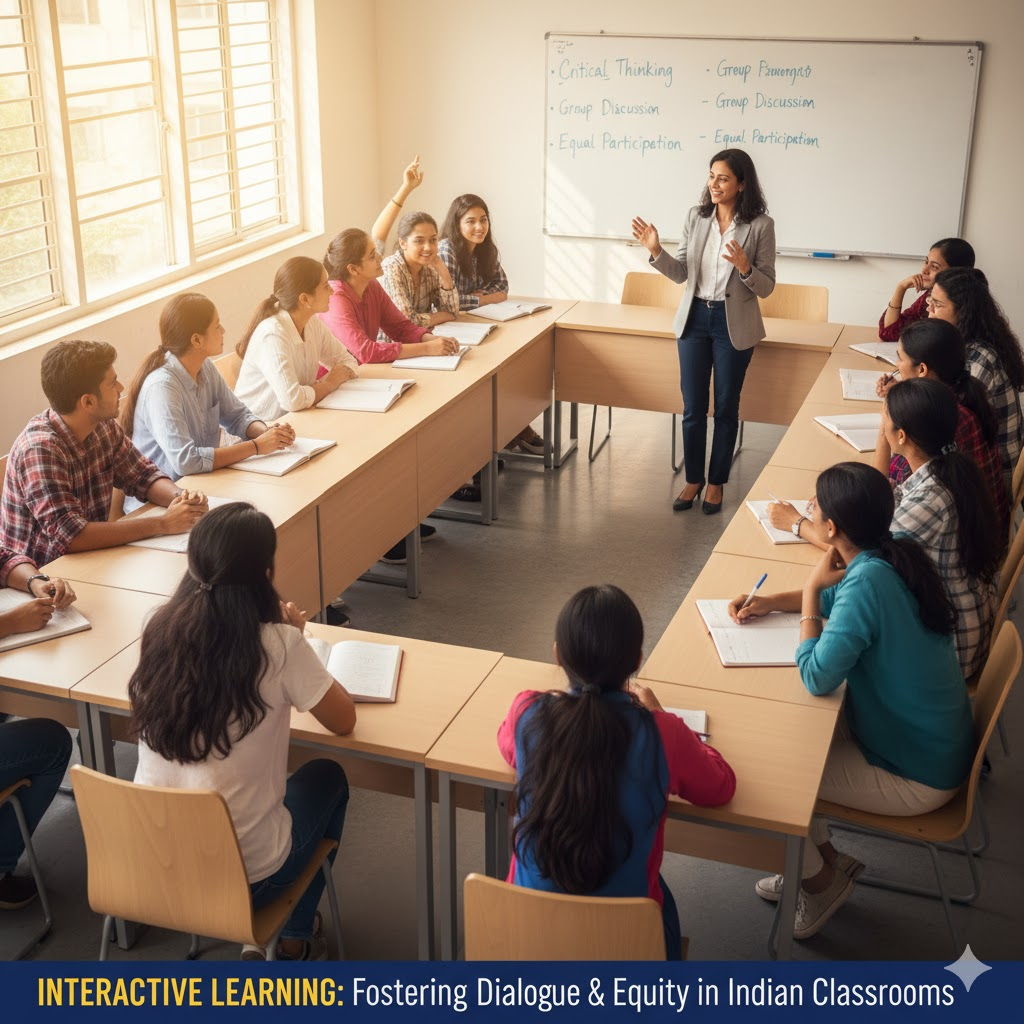
Several schools across India, including those in Gujarat’s Banaskantha district, are redesigning classrooms with a U-shaped seating arrangement to promote active participation, inclusivity, and teacher-student interaction. The shift aims to dismantle the long-standing “back-bench” culture and create a more collaborative learning environment.
The new layout allows every student to face the teacher and peers directly, encouraging open discussions and equal involvement during lessons. Teachers report that the approach has improved attention levels, confidence, and communication among students, particularly in language and social science classes where interaction plays a vital role.
“When all students can see each other, the classroom becomes more democratic. Even shy students are now participating more actively,” said a teacher from a government school in Banaskantha.
Education officials note that the U-shaped format aligns with the National Education Policy (NEP) 2020, which emphasizes experiential and participatory learning over rote methods. Some schools have gone further by integrating flexible furniture, enabling teachers to switch between group work and lecture modes easily.
The model is gaining attention from other states as well, with pilot initiatives reported in parts of Madhya Pradesh, Haryana, and Kerala, supported by district education departments and teacher training institutes.
Experts suggest that such low-cost classroom design innovations can have significant pedagogical impact, improving student engagement without requiring major infrastructure investments.