
Boosting Civic Literacy Through Daily Updates
NEW DELHI – In a directive aimed at fostering greater civic awareness and improving students’ general knowledge, education boards across India have issued mandates requiring all schools to integrate major national and international current events into their daily morning assemblies.
This policy shift moves the traditional morning assembly beyond devotional songs and pledges, transforming it into a crucial platform for disseminating relevant information and stimulating critical thought among students. The initiative is rooted in the belief that consistent exposure to current affairs is vital for developing informed, socially aware, and globally literate citizens.
The Scope of the New Mandate
The circulars issued to school administrations specify that the selection of news topics should be objective, age-appropriate, and diverse, encompassing developments in:
- National Politics and Policy: Important legislative changes, government initiatives, and constitutional developments.
- Global Affairs: Significant international summits, geopolitical changes, and major world news.
- Science and Technology: Breakthroughs, discoveries, and their implications for society.
- Culture and Sports: Achievements in arts, literature, and major sporting events.
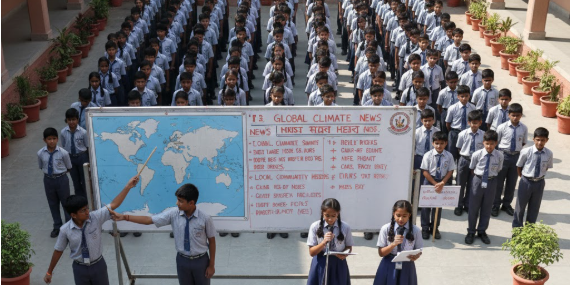
The assemblies are intended to be interactive, encouraging students to actively research and present the news themselves, thereby enhancing their communication skills, research acumen, and self-confidence. Furthermore, the move is designed to ensure that the academic focus is not siloed but contextualized within real-world developments.
Alignment with Climate Literacy Goals
This push for current events integration aligns closely with broader calls from educational experts, particularly those following major events like the recent COP30 climate summit. By making global issues such as climate change, sustainability, and renewable energy a regular assembly topic, schools can effectively embed climate literacy into the curriculum from an early age.
Educational leaders view the morning assembly as a high-leverage opportunity to instill the importance of critical engagement with the world, ensuring that students graduate with not only strong academic credentials but also a robust understanding of their social and environmental responsibilities.