
Leveraging Technology to Bridge Communication Gaps
WASHINGTON, D.C. – K-12 schools across the United States are increasingly integrating Artificial Intelligence (AI)-powered translation tools to provide immediate and effective support for their growing population of English language learner (ELL) students and their families. This adoption signals a critical move toward utilizing EdTech to address equity and accessibility in multicultural classrooms.
Real-Time Support for Students and Families
AI translation technology offers several immediate benefits that traditional support systems often struggle to match:
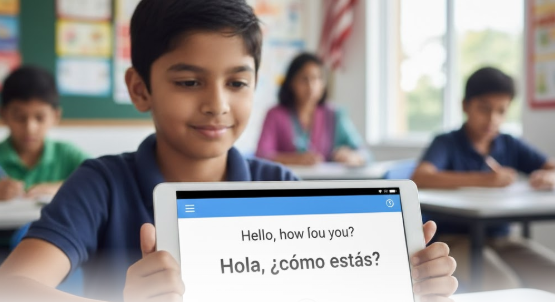
- Instructional Access: AI tools, embedded in devices or as standalone applications, enable ELL students to access and understand classroom instruction, assignments, and curriculum materials in their native language instantly. This eliminates the time lag associated with waiting for human translators or simplified content.
- Family Engagement: Crucially, these tools are transforming parent-teacher communication. Teachers can use AI to translate complex notes, forms, and announcements, facilitating meaningful engagement with families who are not fluent in English. This promotes a stronger home-school partnership, which is vital for student success.
- Administrative Efficiency: The use of AI frees up human language support staff to focus on more complex tasks, such as high-stakes interpreting for individualized education program (IEP) meetings or providing deeper linguistic analysis for curriculum development.
Challenges and Ethical Considerations
While offering immense potential, the deployment of AI translation tools is not without challenges. Educational leaders must contend with:
- Accuracy and Nuance: Ensuring the AI tools maintain a high level of accuracy and cultural nuance is essential, as mistranslations can lead to significant misunderstandings in academic or disciplinary contexts.
- Data Privacy: Schools must rigorously vet the tools to ensure they comply with student data privacy regulations (like FERPA in the U.S.), especially concerning the collection and processing of sensitive personal information.
- Over-reliance: Educators must be cautious not to become overly reliant on the technology, recognizing that direct human interaction and culturally responsive teaching remain indispensable components of successful ELL education.
Ultimately, the successful integration of AI translation tools is poised to make instructional environments more equitable, ensuring that language is no longer a primary barrier to academic success for diverse student populations.