
Global | November 8, 2025
Recent education reports, including findings from the OECD, highlight an urgent global need for schooling systems to integrate resilience, sustainable living, and climate action into both curricula and institutional design.
As climate-related disruptions and social challenges intensify, educators and policymakers are being called upon to prepare students not just academically, but also as adaptive, environmentally conscious citizens. The OECD notes that many national education systems are now re-examining their goals, emphasising sustainability, well-being, and civic responsibility as key outcomes alongside literacy and numeracy.
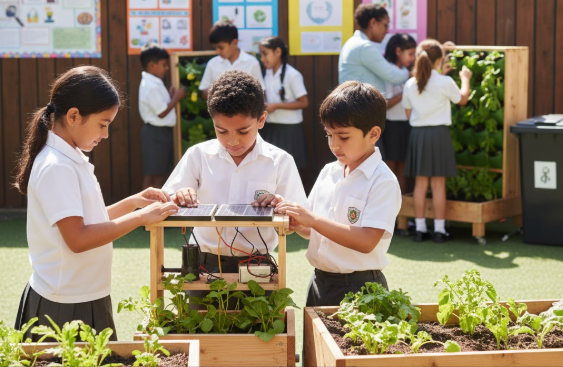
From primary classrooms to universities, schools are incorporating themes such as energy transition, ecological balance, and community resilience into science, social studies, and project-based learning. Some systems are also aligning teacher training and school infrastructure with sustainability goals, moving beyond symbolic “green days” toward structural integration of climate education.
Experts stress that education for sustainable development must become a core competency rather than an elective topic, helping young people face future environmental, social, and economic uncertainties with informed action and innovation.